
Food Systems Resilience and the Pandemic
We observed lessons learned from the COVID-19 pandemic about fostering resilience and adaptation in local food systems. We observed that while the continuity of the market met consumer and vendor needs, the typical sociality of the space was in many ways suspended. We examined food system experiences and responses during the COVID-19 pandemic through a study of a local food system in the central Piedmont region of North Carolina. Additionally, we conducted ethnographic interviews between 2020-2021 to document how these pandemic challenges impact the experiences of those involved in food production and in consumption. We interviewed a diverse sample of actors: farmers (produce, honey, poultry, and meat), food access organizations involved in promoting or connecting food with people (food banks and pantries, farmers’ markets, and community councils), and local government (public housing, municipal planning, cooperative extension, and health departments).
Our study revealed how adaptive knowledge and resources, made available through social connections, were key to points of resilience described in our findings. This diverse sample of actors involved in the food system at the local level show how communication and social networks, or the lack thereof, played key roles in participants’ ability to pivot to meet the near-weekly shifts and challenges from the pandemic. Similarly, innovations through the integration of new technologies and changes in organizational or civic operations were sources of strength and even growth for many study participants. We also detail disagreement among perceptions of government responses, the mixed impacts of shifts in labor pools, and disparities in food access and food needs among Latinx and other populations with heightened COVID-19 risks. Ultimately, this study offers insights into the pandemic experience for local food systems while identifying areas for further research that can strengthen food system resilience in times of crisis and stability.
Diversity and Inclusion at the Botanical Gardens
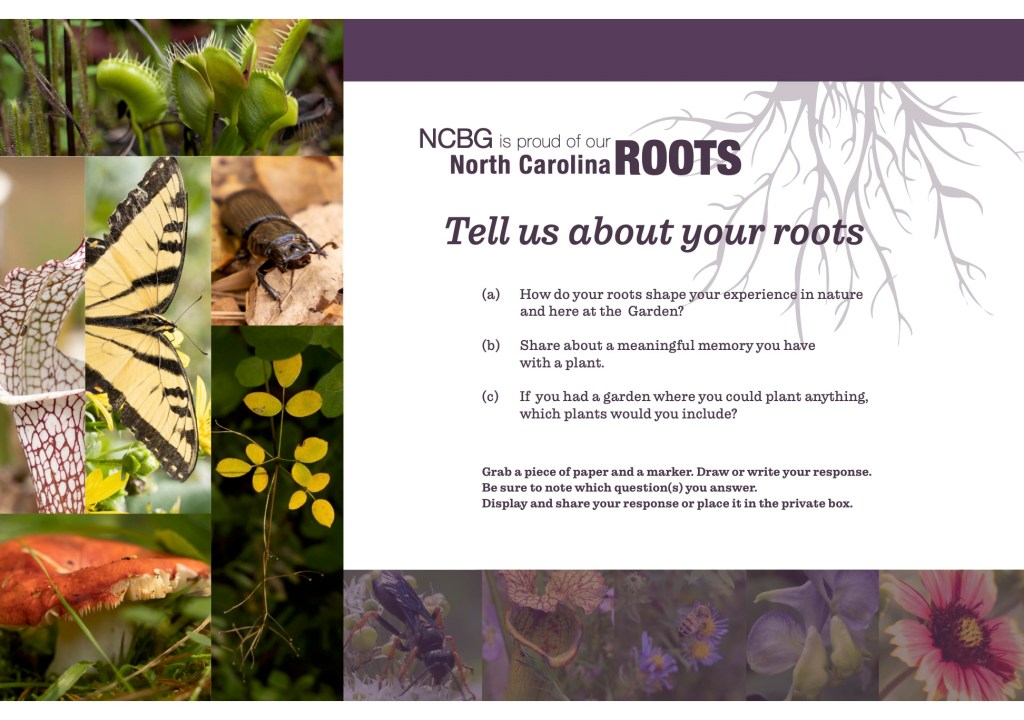
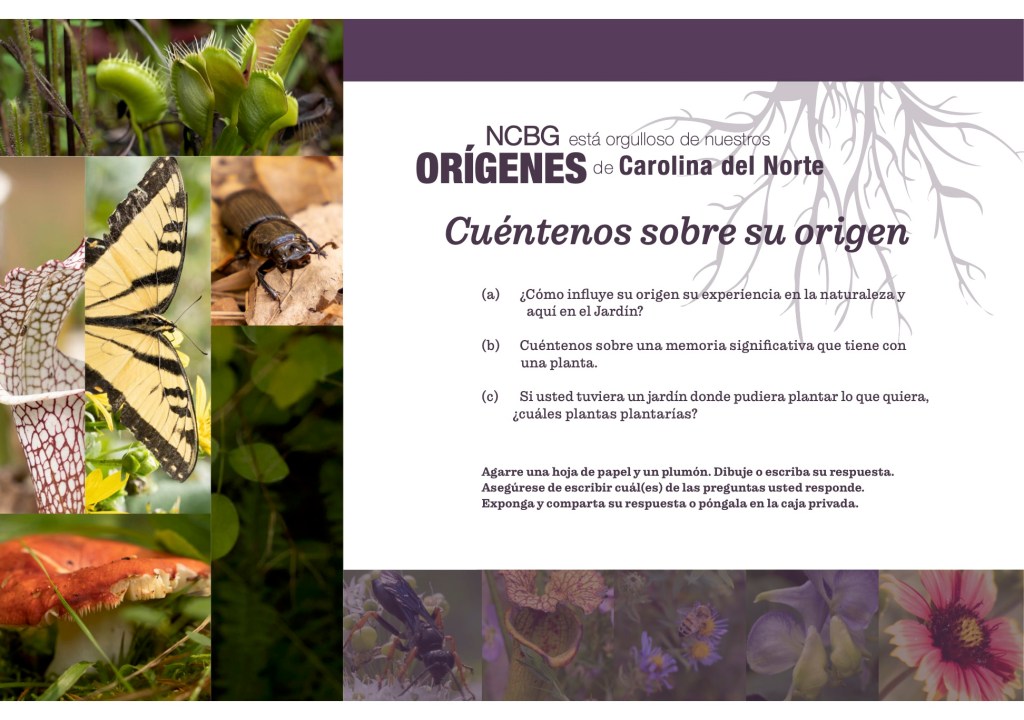
A qualitative study to capture the diverse backgrounds and plant connections of people who visit the North Carolina Botanical Gardens (NCBG). This project complemented NC State’s Impact NC mixed-methods data about Garden visitor demographics. We designed an activity to solicit open-ended feedback from visitors about how their upbringing shapes their experience in the garden and with plants. The intent was to invite stories and experiences that might share more about the diverse relationships with plants and motivations for visiting NCBG than can be captured in demographic data.
Environmental Learning during the COVID-19 Pandemic
To increase parent and child engagement with the NC Botanical Gardens, SECR Lab created an online scavenger hunt that leads guests through the various display gardens. In each garden, kids and their parents are encouraged to fully immerse themselves and use multiple senses — sight, smell, touch, sound— to engage with their surroundings. This project also provides educational and recreational resources to parents in a COVID-19-friendly outdoor setting. Check out the scavenger hunt here!
Environmental Education and Early Childhood Learning
For this research project, we partnered with a preschool for evidence of nature exposure in early childhood development. We surveyed families and the preschool used the information collected to secure the building of a nature classroom.
Conservation Education and Visitor Experience
This was a comparative study of conservation education and visitor experience at two exhibits in the Knoxville Zoo, Tenessee. The two exhibits included a recently updated one (new) and one the zoo wanted to remodel (old). The old one was the herpetology exhibit which houses some animals that the general public is often afraid of, such as snakes. To understand the positive outcomes of the new section and identify what was needed to best remodel the old section, we took ethnographic observations and conducted surveys and interviews with visitors in both the new and old sections. The zoo then used this data to apply for and obtain grants for remodeling the old exhibit.
 Caela O'Connell